
Dental Check-Up in Jimbaran: What Happens and How Often You Need One
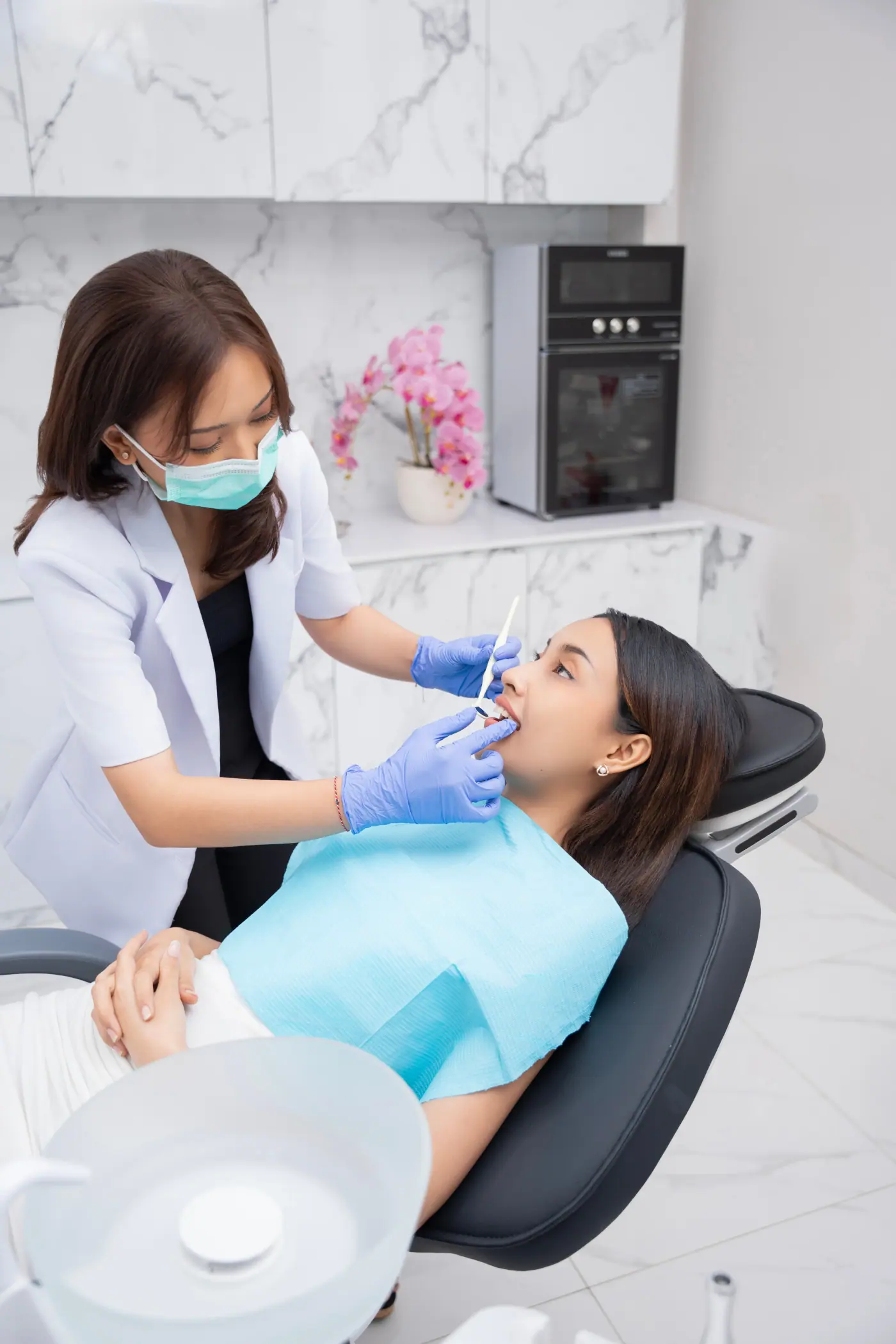
When was the last time you saw a dentist? If the honest answer is “when something hurt,” you are in good company.
Indonesia’s 2023 national health survey (SKI) found that 56.9% of people aged 3 and older had a dental or oral health problem in the past year. Only 11.2% of them went to a dental professional for it. The rest waited, took painkillers, or ignored it.
The catch is that early tooth decay rarely hurts. Tartar doesn’t hurt either. By the time pain shows up, the damage usually runs deeper, the treatment takes longer, and the bill is bigger. A regular dental check-up is how you break that cycle.
What Is a Dental Check-Up?
A dental check-up is a full examination of your teeth, gums, and mouth by a dentist, done to catch problems before they cause symptoms. For adults with healthy teeth and gums, the usual recommendation is once every 6 months. It’s quick, it doesn’t hurt, and you don’t need to prepare anything special.
The difference from an emergency visit is simple. At a check-up, the dentist looks for problems you can’t feel yet. When you come in with pain, the dentist can only fix what has already gone wrong.
What Happens During a Dental Check-Up?
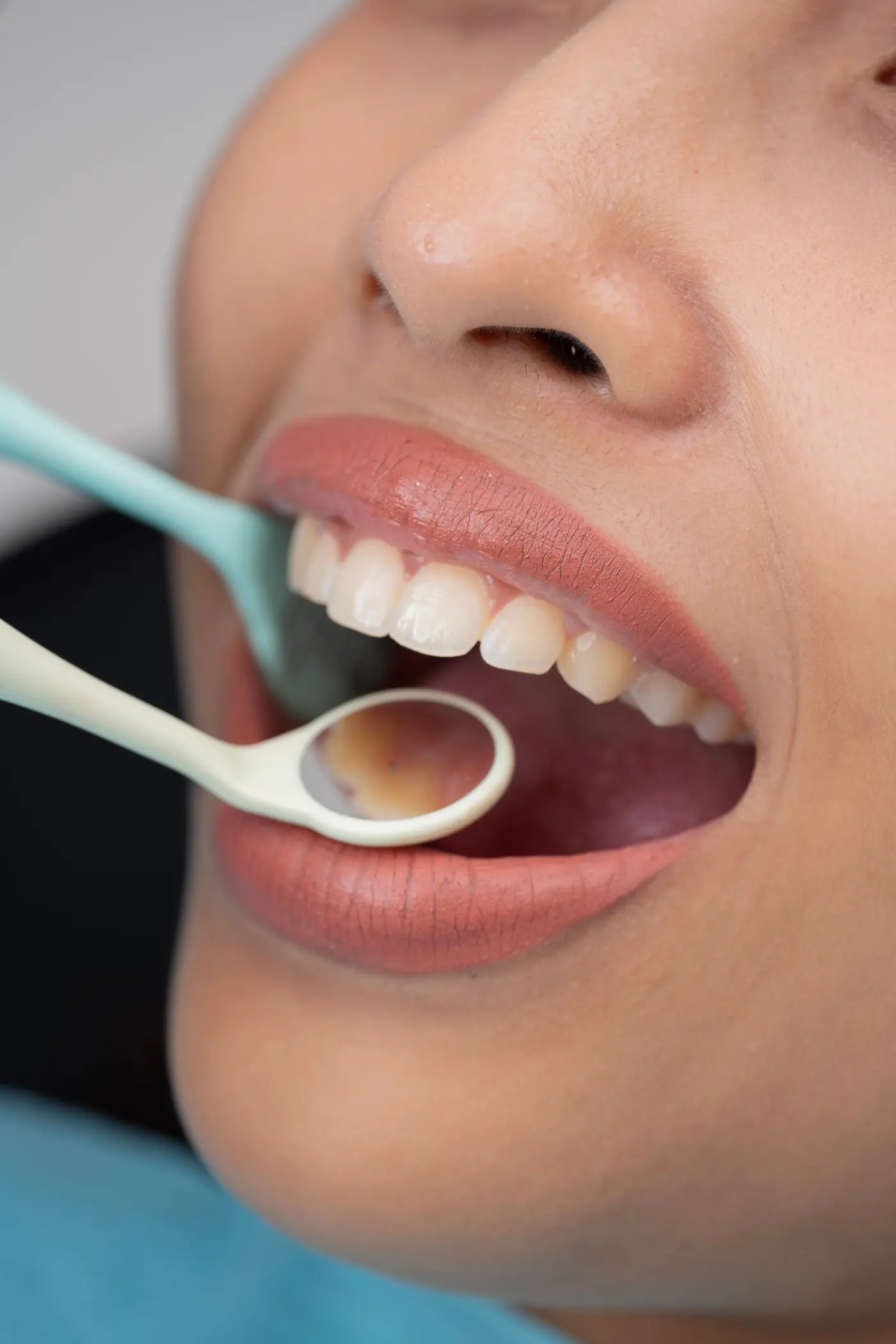
Every clinic has its own routine, but a standard check-up usually covers these six steps.
1. A short conversation with your dentist
Your dentist will ask about any complaints, past dental work, medications you take, and habits like smoking or drinking coffee. This isn’t small talk. Some medications and health conditions affect your gums and change which treatments are safe for you.
2. A tooth-by-tooth exam
Using a small mirror and probe, the dentist checks every surface of every tooth. They’re looking for small cavities, dark spots in the grooves, cracks, and old fillings that have started to leak or come loose.
3. Gums and tartar
Healthy gums are pink and don’t bleed when touched. Your dentist checks whether your gums are swollen, bleed easily, or have started to recede. This is also when they see how much tartar has built up, usually behind the lower front teeth and between the back molars.
4. Bite and alignment
Crowded or tilted teeth and an uneven bite make cleaning harder. Over time, they can also put extra strain on your jaw joint.
5. Soft tissue in the mouth
Your tongue, inner cheeks, palate, and the floor of your mouth are checked too. A mouth ulcer that hasn’t healed after two weeks, or a white patch that won’t go away, needs a closer look.
6. X-rays when needed
Some problems can’t be seen with the eye: cavities between teeth, infections at the root, or a wisdom tooth growing at an angle. If needed, your dentist will recommend a dental X-ray.
At the end, your dentist explains what they found and puts together a treatment plan. Ask anything you want, including the cost, and decide together what to do first.
How Often Should You Get a Dental Check-Up?
The general rule for adults with healthy teeth and gums is every 6 months. Your dentist will set the right interval for you after seeing your mouth.
| Your situation | Typical check-up schedule |
|---|---|
| Adult, healthy teeth and gums | Every 6 months |
| Gums that bleed often, fast tartar buildup, or a smoker | More often, as your dentist advises |
| Wearing braces | Follow your braces control schedule |
| Children | From the first tooth, no later than age 1, then regularly |
| Pregnant | A check-up during pregnancy is recommended; tell your dentist how far along you are |
Signs You Shouldn’t Wait for Your Next Check-Up
Book an appointment soon if you notice any of these:
- Teeth that feel sensitive to cold, hot, or sweet food and drinks
- Gums that bleed when you brush, again and again
- Bad breath that stays even after brushing
- A visible hole or dark spot on a tooth
- A loose tooth (in adults)
- A mouth ulcer that hasn’t healed in two weeks
- Jaw pain when chewing or opening your mouth
- Swollen gums, especially with a pus-filled bump
That last one needs attention quickly, because it can be a sign of infection.
From Check-Up to Treatment: What Your Dentist Might Recommend
Not every check-up ends with a procedure. If your teeth are healthy, you’ll get home-care advice and a date for your next visit. If something comes up, these are the most common next steps.
| What the dentist finds | Treatment usually recommended |
|---|---|
| Tartar buildup, gums that bleed easily | Dental scaling |
| A small to medium cavity | Tooth filling |
| A deep cavity that has reached the nerve | Root canal treatment |
| A badly damaged tooth or problem wisdom tooth | Tooth extraction |
| A missing tooth | Dental bridge |
| Yellow or dull teeth | Teeth whitening |
| Crowded teeth or an uneven bite | Braces |
| Uneven shape, size, or color of the front teeth | Porcelain veneers |
Why scaling often comes first
Tartar is plaque that has hardened. Brushing removes plaque, but it can’t remove tartar. Left alone, tartar irritates the gums and gives bacteria a place to grow. That’s why scaling is often done during the same visit as the check-up.
Whitening vs. bleaching: is there a difference?
People often use the two words for the same thing: lightening tooth color with a whitening agent under a dentist’s supervision. What matters more than the name is the order. Teeth should be cleaned and any cavities filled before whitening, which is why a check-up comes first.
Braces or veneers for a straighter smile?
Braces move teeth into a new position over time, so they suit crowded teeth or bite problems. Veneers are thin shells bonded to the front of the teeth to change their shape and color. Which one fits you depends on your teeth, and only an exam and a consultation can tell.
Dental Check-Ups for Children: When Should They Start?
Earlier than most parents think. The same 2023 survey found tooth decay in 84.8% of Indonesian children aged 5 to 9. Baby teeth will fall out eventually, but decay in them still causes pain, infection, and trouble eating, and it can affect the adult teeth growing underneath.
A good rule is to bring your child in when the first tooth appears, and no later than their first birthday. After that, regular visits help your child get used to the dentist.
One tip from experience: schedule the first visit when nothing hurts. If a child’s first memory of the dental chair is pain, every visit after that gets harder.
How to Prepare for Your Check-Up
There’s not much to do, but these small steps help your dentist help you:
- Brush and floss as usual. No need to scrub extra hard the night before.
- Write down any complaints, like a tooth that feels sensitive or gums that bleed.
- Bring a list of medications you take, including supplements.
- Tell your dentist if you’re pregnant or have a medical condition.
- If you feel anxious at the dentist, say so at the start. A good dentist will explain each step and let you take breaks.
Dental Check-Up at Nerisa Dental Clinic Jimbaran
If you live or stay in Jimbaran or elsewhere in South Kuta, Nerisa Clinic Jimbaran is close by. Our dentists handle everything from routine check-ups and scaling to fillings, root canals, whitening, braces, and veneers, so the findings from your check-up can be treated in one place.

| Address | Jalan Danau Batur Raya No. 7, Jimbaran, South Kuta, Badung, Bali |
| Opening hours | Sunday to Thursday, 10:00 to 18:00 WITA; Friday and Saturday, 11:00 to 20:00 WITA |
| Booking | Via WhatsApp from our contact page |
It has been more than six months since your last check-up, or you can’t remember when it was? That’s your sign. Book your dental check-up at Nerisa Jimbaran and let our dentist take a look before small problems turn into big ones.
Frequently Asked Questions
How long does a dental check-up take?
A routine check-up is usually quick. It takes longer if you also have scaling done or need an X-ray during the same visit.
Does a dental check-up hurt?
No. The exam itself is painless. If you have sensitive teeth or gums, scaling can feel a little uncomfortable, and you can ask your dentist to go slower.
Do I need scaling at every check-up?
Not always. It depends on how much tartar has built up. Many people need it about twice a year, but some need it more often and some less.
I have no complaints. Do I still need a check-up?
Yes. That’s exactly the point of a check-up. Early cavities and gum disease often have no symptoms, and they’re easier and cheaper to treat when caught early.
Do baby teeth really need a check-up if they’re going to fall out?
Yes. Decay in baby teeth can cause pain and infection, make eating difficult, and affect the adult teeth growing underneath.
This article is for general information and does not replace an examination by a dentist.
Sources: Indonesian Ministry of Health via InfoPublik: SKI 2023 dental health data · Indonesian Ministry of Health (Kemenkes RI)